2nd Annual Board and CEO Risk Study
Ready or Not
Amid high CEO turnover and AI shifts, boards are under a series of pressures. Can they keep up?


Leadership transition used to come with breathing room. Boards had time to prepare successors, and new CEOs had time to build trust and settle into the role before major pressure arrived.
That breathing room is disappearing.
CEO turnover remains stubbornly high. AI is changing what businesses need from their leaders, while firms continue to struggle to find workers with the right skills. It's all unfolding at a pace organizations are just not used to.
Korn Ferry’s CEO and Board Survey 2026 reflects these growing pressures, which are particularly acute for first-time CEOs taking the helm during periods of transformation.
The survey also reveals a widening confidence divide between boards and CEOs around AI, talent, and leadership risks.
Organizations are entering a new era of leadership transition, where boards and CEOs often agree on the risks ahead—but not on how prepared they are to face them.
“It’s increasingly common for new CEOs to take the helm in the middle of major organizational change."
Tierney Remick, co-leader, Board & CEO Services, Korn Ferry
Who's ready for AI?
While 49% of first-time CEOs say they're confident managing AI and technology risks, only 30% of board members agree.

Confidence in managing AI and future technology risks, by respondent group%
A universal priority
AI and technology capability is now a leadership priority across every sector—not just for tech companies.

Respondents who identified AI and technology proficiency as the most important leadership skill for the next three years, by industry
Still catching up
AI is the highest-ranked leadership capability for the next three years. Yet confidence in managing AI risks falls behind its importance.

Importance of AI and technology proficiency as a leadership skill versus confidence in managing AI and technology risks, by respondent group


Leadership Transition Has Less Runway
Boards hire CEOs faster than their succession systems can handle.
Succession no longer unfolds as neatly around tenure and retirement expectations as it once did.
Yet succession planning practices haven’t fully adapted to that reality.
Succession starts too late, too often
Across roles and industries, many leaders say their last CEO transition wasn't planned early enough—suggesting succession is still treated as an event rather than an ongoing responsibility.
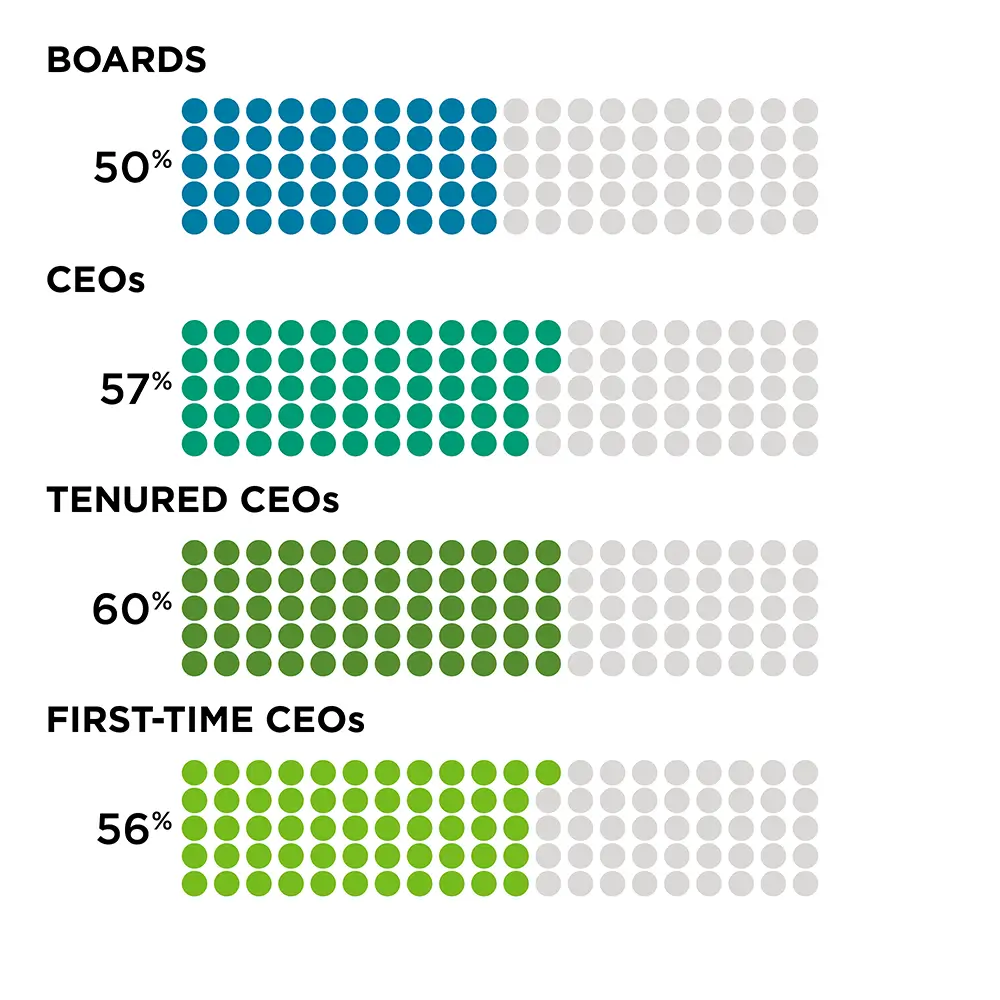
Respondents who said planning for their organization's last CEO succession began too late, by respondent group

Respondents who said planning for their organization's last CEO succession began too late, by industry
Boards Need Better Visibility
- 69% of boards say they failed to gather enough 360-degree feedback during their last CEO succession process.
- 60% of boards say succession planning works best when treated as an ongoing process, but only 17% review succession plans quarterly.
Many boards are still relying on succession systems built for a different pace of leadership transition.
“Boards need succession systems that are built for faster transitions."
Jane Edison Stevenson, global vice chair, Board & CEO Services, Korn Ferry
Real succession preparedness now depends on whether organizations know they can maintain continuity, trust, and decision-making during leadership change.


First-Time CEOs Are the Pressure Point
Expectations are rising faster than preparation.
The onboarding period for new CEOs is getting shorter. Many are expected to make major decisions early in their tenure while still earning confidence across the organization.
Nonetheless, most first-time CEOs feel prepared to move quickly, especially around technology and transformation. However, the boards who hired them are less certain.
Boards expect more for less
On average, only 15% of boards believe they did a very strong job preparing their first-time CEO, despite some variation by industry. As leadership transitions accelerate, preparation hasn't kept pace with the expectations placed on new leaders.

Boards that said their organization did a very strong job preparing its first-time CEO, by industry
The hardest part is knowing where to start
More than half of first-time CEOs say balancing their time and energy is one of the hardest parts of the role. Success depends not on doing more, but on knowing where to focus first.
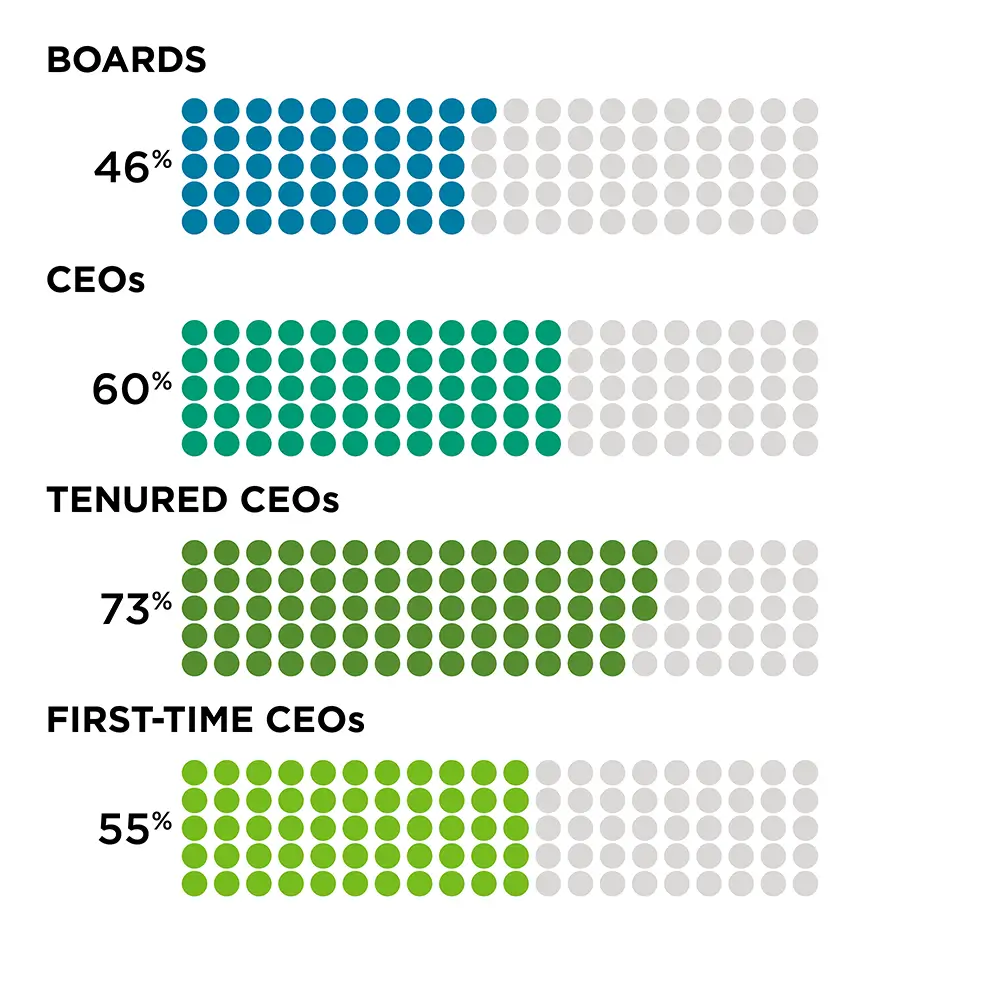
Respondents who identified balancing time and energy as one of the biggest challenges for first-time CEOs, by respondent group
"The CEO role has become more exposed. Leaders have less time to build trust with boards, employees, and investors before they're called on to make decisions that can shape the future of the business."
Dominic Schofield, chair, Board & CEO Services UK, Korn Ferry
Organizations need stronger support systems for CEOs, especially first-timers, during transition periods. Success increasingly depends on helping new leaders make the right decisions before they have the benefit of time and experience.


Same Risks, Different Confidence
Agreement on risk doesn’t mean agreement on readiness.
Boards and CEOs largely agree on the risks organizations face in 2026 and beyond. But there's a divide in how confident they feel managing them.
Across nearly every category tied to transformation and future workforce change, boards reported lower confidence levels than CEOs.
Confidence in managing future talent needs
Half of all CEOs surveyed are confident their organization can manage future talent and skills challenges. Boards are less confident, suggesting they see greater talent and skills challenges ahead.
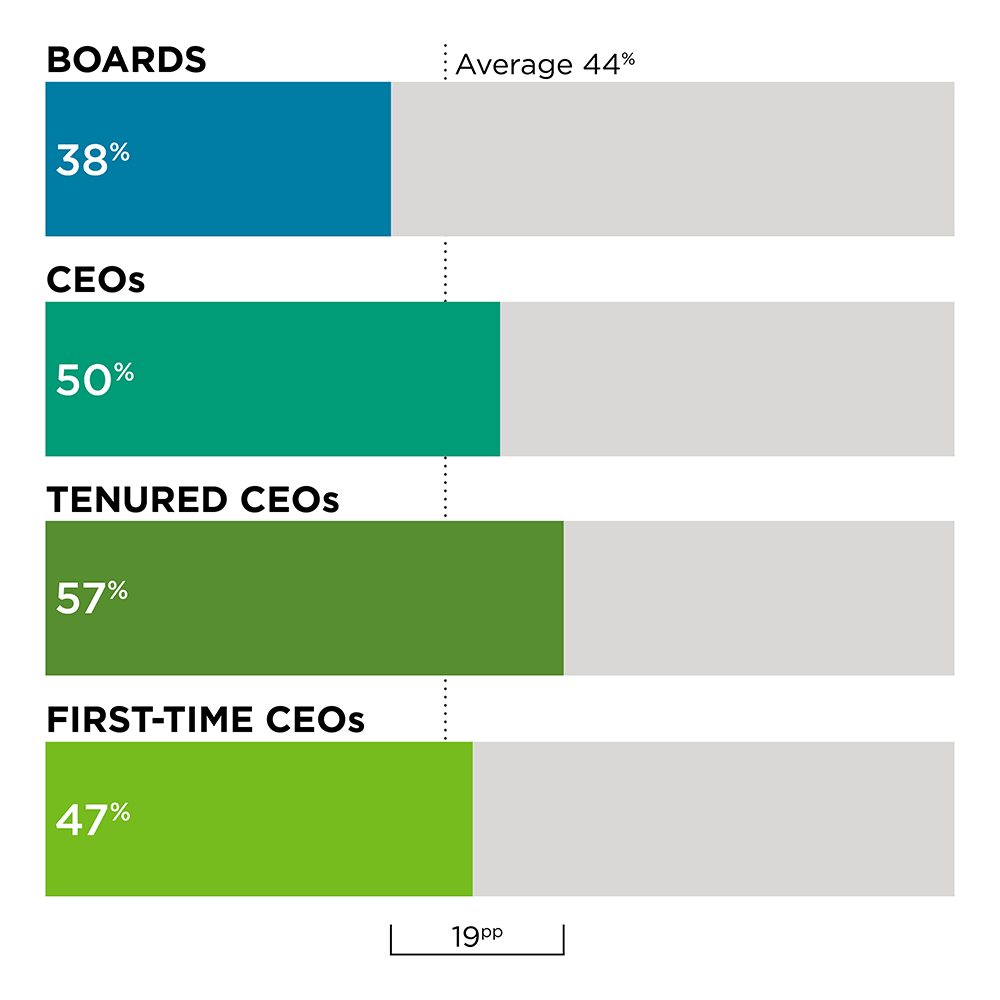
Respondents confident in their organization's ability to manage talent and skills risk, by respondent group
Boards and CEOs approach transformation risk from different positions. CEOs are often closer to execution pressure and operational urgency. Boards are balancing continuity, governance exposure, and longer-term organizational resilience.
The confidence gap even shapes how boards and CEOs assess the organization itself. Those different perspectives may also influence succession decisions.
Same challenges, but different perspectives
CEOs tend to view the organizations they inherit more positively than boards do, suggesting leadership transitions often begin with different assumptions about the challenge ahead.
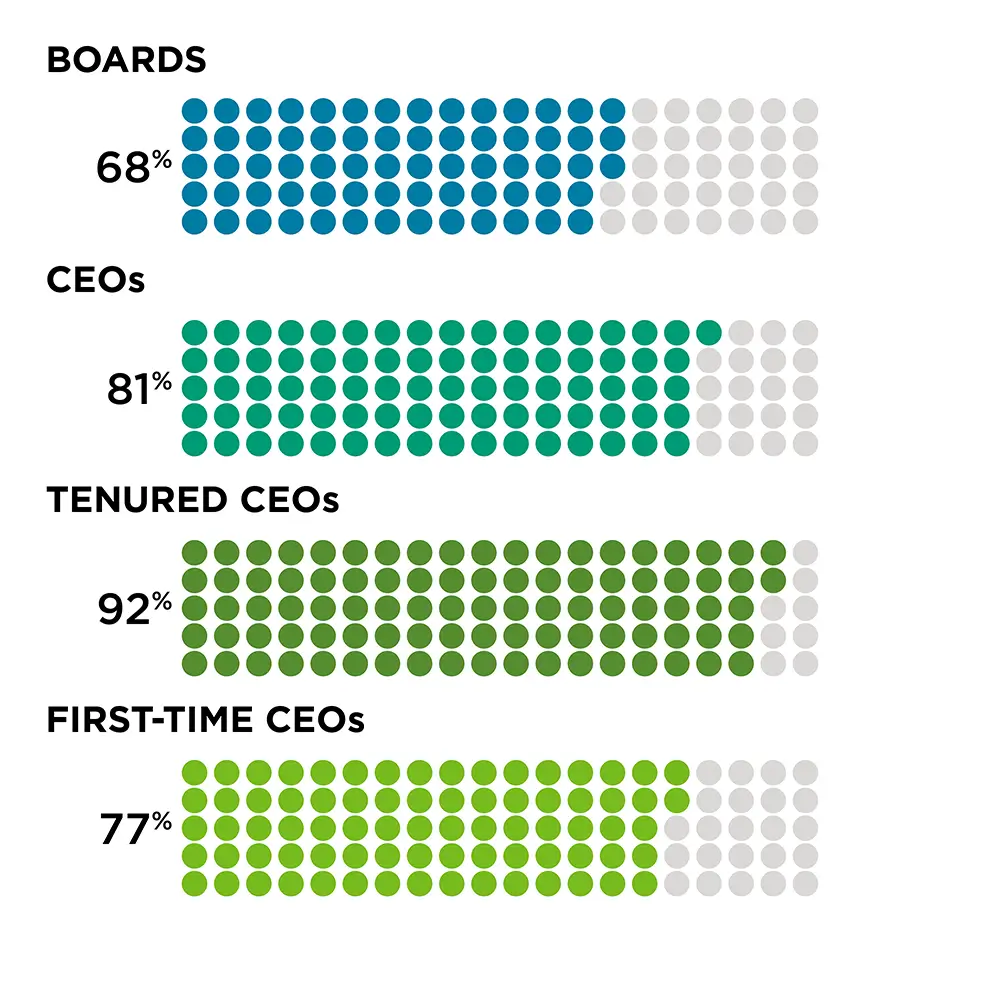
Respondents who rated their organization's operating performance positively, by respondent group
Playing It Safe Can Be Risky
Looking back on their most recent CEO appointment, 50% of boards say they played it too safe, falling back on what’s worked before instead of what may transform the company now. When the need for agility is high, avoiding risk in succession decisions may carry risks of its own.
“Boards are nervous, but leaders feel ready for the challenge.”
Jane Edison Stevenson, global vice chair, Board & CEO Services, Korn Ferry
Differences in confidence shape how quickly organizations move and how much risk boards are willing to support during periods of transition.


Trust Has to Form Faster
There's no time for boards and CEOs to ease into the relationship.
Leadership transition often begins before trust is fully established between boards and new CEOs. Many leaders are tasked with making major strategic decisions in the early days, while they’re still learning about the business.
Trust doesn't arrive on day one
Most boards (83%) are confident in their first-time CEO's ability to lead. But just 10% say that their CEO is already fully connected to and trusted by the board. As leadership transitions accelerate, trust has become one of the last things to arrive.
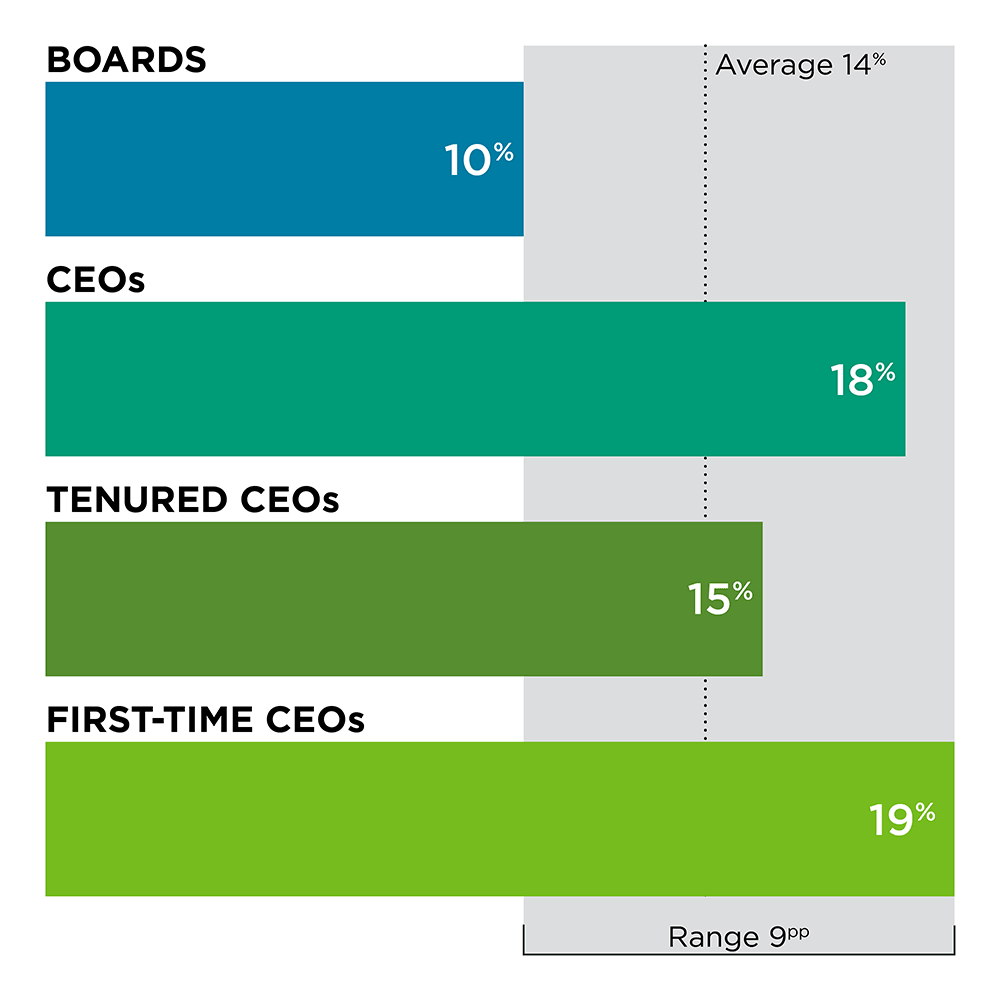
Respondents who said their first-time CEO is fully connected to and trusted by the board, by respondent group
Boards trust a new CEO’s capability before they fully trust how that leader operates under pressure.
Trust affects how quickly organizations move and how effectively boards and CEOs make decisions together during periods of change.
“Boards need to know the person, not just the experience. They need to make a deliberate effort to understand how a leader makes decisions, builds trust, and operates under pressure."
Tierney Remick, co-leader, Board & CEO Services, Korn Ferry
Successful leadership transition increasingly depends not only on choosing the right CEO, but also on helping boards and leaders build trust quickly enough to move the organization forward together.


Keep Momentum Through Transition
Leadership transition is becoming part of how organizations adapt to change.
Boards are changing leaders more proactively, and first-time CEOs are stepping into roles shaped by higher expectations, faster decisions, and greater visibility.
The challenge is no longer simply choosing the right leader. Organizations also need to maintain trust, continuity, and momentum while leadership itself is evolving.
The best organizations get stronger through change
A majority of boards and CEOs say leadership change has strengthened their organization's ability to manage risk. And 61% say board turnover has brought new strengths into the organization. Rather than disrupting performance, successful transitions can improve resilience when supported by the right governance and leadership practices.
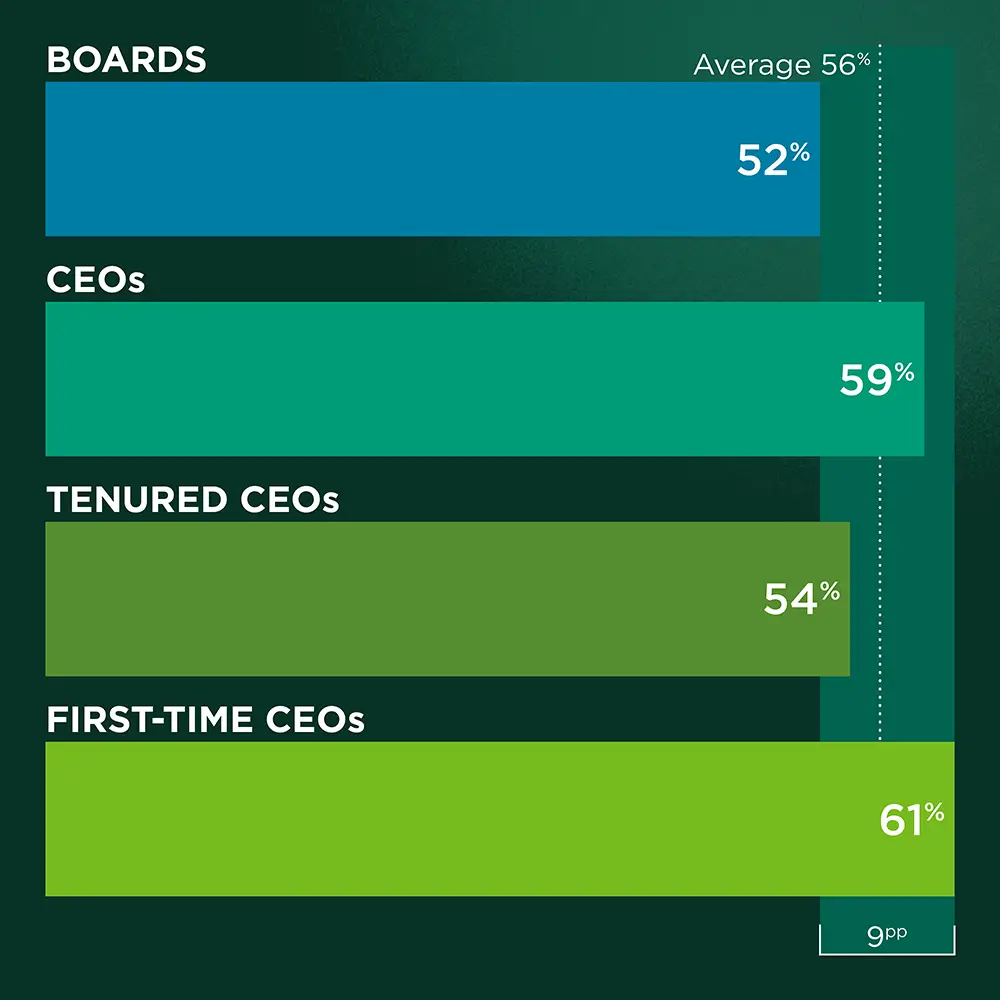
Respondents who said their organization's most recent CEO transition strengthened its ability to manage risk, by respondent group
The organizations adapting best aren't the ones avoiding leadership transition. They’re the ones building systems, relationships, and governance practices that help leaders become effective more quickly.
Leadership change is becoming easier to trigger. Helping new leaders become effective faster will define the organizations that adapt best.
Prepare for Leadership Transition at Speed
Explore how Korn Ferry’s Board & CEO Services help organizations prepare leaders, accelerate trust, and sustain momentum through change.

Our Experts

Global Vice Chair, Board and CEO Services, Global Leader, Board and CEO Succession


For our annual survey of boards and CEOs, Korn Ferry surveyed 250 board directors and chief executives, including first-time CEOs, in April 2026. Respondents represented seven industries across the US (60%), the UK (20%), and EMEA (20%), and belong to organizations with 1,000 to 20,000+ employees.
The survey explored how boards and CEOs are navigating leadership transition, organizational risk, succession readiness, governance, and trust.
